
In Spain, you’ll see the same humble ingredients show up again and again, transformed into completely different dishes depending on the region, the season, or what someone might have leftover in the fridge. Tomatoes, crusty bread, olive oil, and garlic are some of the best examples. Put them together one way and you have pan con tomate; add paprika and broth and you’re closer to sopa castellana; blend them with peppers and cucumber and you have gazpacho; or turn ripe summer tomatoes, bread, olive oil, and garlic into one of Córdoba’s most iconic dishes: salmorejo.
That kind of resourcefulness is one of the things I love most about Spanish cooking. It doesn’t take a long list of ingredients to make something incredible, just a little technique and some good quality ingredients.
One of my favorite dishes to eat in Andalucía in the summer is salmorejo, a thick, chilled soup that originated in Córdoba. If you’ve ever been to Córdoba in the summer, you’ll understand why most dishes eaten are cold. Temperatures in the peak of summer average 100°F (38°C) and the heat can be particularly brutal around lunchtime. So it’s no surprise a cold soup would be found on most menus. The traditional version has just tomatoes, crusty bread, olive oil, and salt, then topped with diced jamón serrano and hard-boiled egg. I like adding a garlic clove and small splash of sherry vinegar to really round out the flavors.
It’s also incredibly easy to make. No stove, no oven, and barely any prep. Just blend everything until silky smooth, chill it, and pile on the toppings. On a hot summer day, there are honestly few things I’d rather eat.
Gazpacho vs. Salmorejo
If you’ve had gazpacho, you might be wondering how salmorejo is different. Both are classic Andalusian chilled soups made with ripe tomatoes, olive oil, garlic, and vinegar, but the texture and proportions are quite different.
Gazpacho is lighter and more refreshing, typically blended with a mix of tomatoes, cucumber, peppers, onion, garlic, olive oil, and vinegar. It’s vegetable-forward and thin enough to drink or sip from a glass.
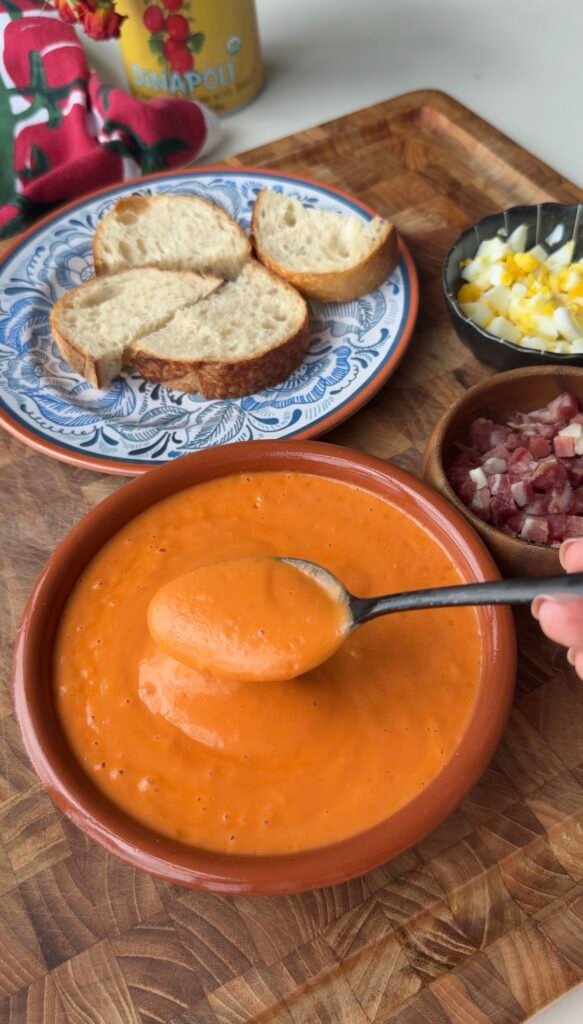
Salmorejo, on the other hand, is much thicker and creamier thanks to a generous amount of crusty bread blended with the tomatoes and olive oil. It’s traditionally served in a bowl and topped with diced jamón serrano and hard-boiled egg and eaten with a spoon or more crust bread for dipping.
Why You’ll Love This Recipe
- It’s peak summer in a bowl. Ripe, juicy tomatoes do most of the work here, making this especially good when tomatoes are at their best.
- No cooking needed. Everything goes straight into the blender, making this an ideal hot-weather meal.
- Bread and olive oil give the soup its signature body and creaminess, while garlic and a lil splash of sherry vinegar round out the flavors.
- It gets better cold. Make it ahead, let it chill, and you have an easy lunch or starter ready to go.
Ingredients
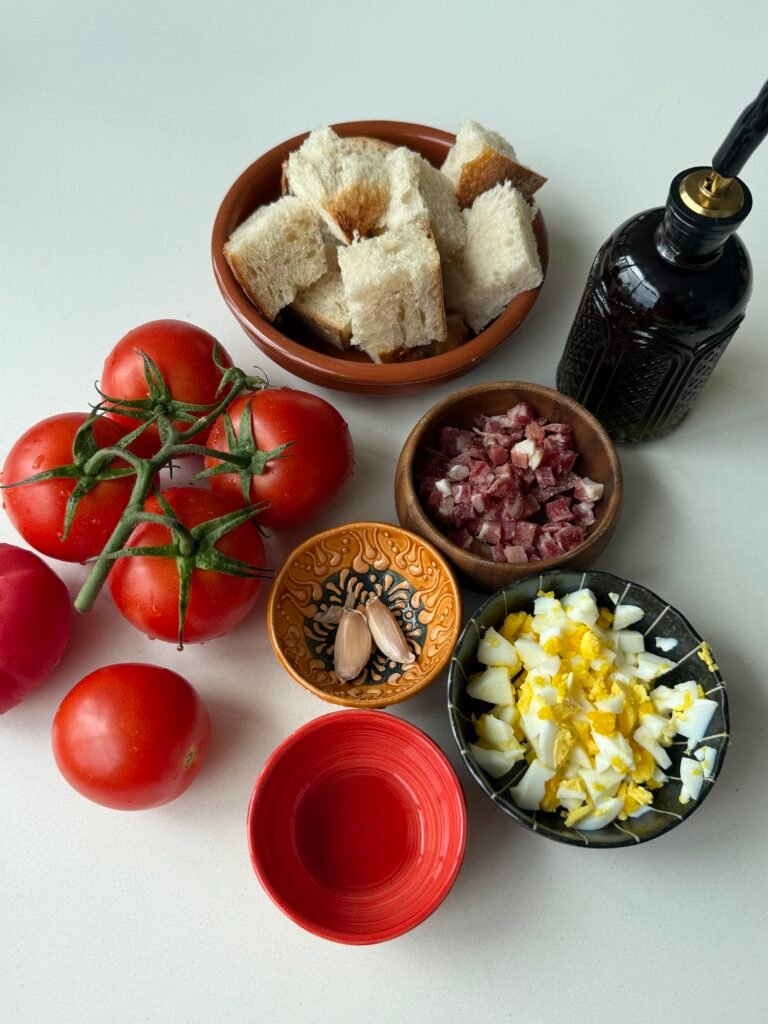
- Tomatoes: Use ripe, flavorful vine-ripened or heirloom tomatoes. Since the tomatoes are the star of the dish, this is not the place for bland, out-of-season tomatoes.
- Crusty bread: Salmorejo gets its thick, velvety texture from bread. A rustic white loaf or other crusty bread works best. Feel free to use stale bread as well! The bread sits in the tomato juices to soften before blending, so stale or fresh bread both work here.
- Olive oil: Use a good extra-virgin olive oil since it adds both flavor and richness to the soup.
- Garlic: One clove is enough to add flavor without overpowering the tomatoes.
- Sherry vinegar: A small splash adds acidity and balances the sweetness of the tomatoes.
- Jamón serrano: Traditionally served diced over the top for a salty, savory contrast.
- Hard-boiled eggs: Another classic topping that adds richness and flavor.
Tips & Tricks
- Use the ripest tomatoes you can find. Salmorejo is a simple recipe, so there’s nowhere for mediocre tomatoes to hide.
- Blend longer than you think you need to. The smoother the mixture, the silkier the finished soup.
- Slowly stream the olive oil in as you blend. This helps emulsify the soup and creates that luxurious texture salmorejo is known for. You’ll be surprised at how much the texture changes from first stream to last.
- Chill before serving. Salmorejo should be served cold, and giving it time in the refrigerator also allows the flavors to meld.
Serving Suggestions
Traditionally, salmorejo is served cold with finely diced jamón serrano and hard-boiled egg scattered over the top. Finish it with a generous drizzle of extra-virgin olive oil and serve with extra crusty bread for dipping.
It makes a great light lunch on its own, but I also love serving it as a starter alongside other Spanish-inspired dishes. If you want a full traditional spread common in Córdoba, serve with berenjenas con miel and flamenquín. And because it can be made ahead, it’s especially good for summer entertaining.
Print
Salmorejo Cordobés (Spanish Chilled Tomato Soup)
- Total Time: 1 hour
- Yield: 4
Description
This classic Spanish salmorejo is a thick, creamy chilled tomato soup made with ripe tomatoes, crusty bread, olive oil, garlic, and sherry vinegar, topped with jamón serrano and hard-boiled egg.
Ingredients
For the Salmorejo Cordobés:
- 5 medium vine-ripened tomatoes, quartered (about 1¼ lbs)
- 1 garlic clove
- 100g crusty bread (about 3–4 slices), cubed + more for serving
- 1 tsp sherry vinegar
- ⅓ cup extra-virgin olive oil (72g), plus more for drizzling
- Salt, to taste
- 100g jamón serrano, diced
- 2 hard-boiled eggs, diced
Instructions
For the Salmorejo Cordobés:
- Add the quartered tomatoes, garlic, and a small pinch of salt to a high-powered blender and blend until completely smooth.
- Add the cubed bread and push it down with a spoon to completely cover it in the tomato mixture. Let it sit for 5-7 minutes to soften.
- Add the sherry vinegar, and blend again until smooth. With the blender on low, slowly stream in the olive oil until the mixture is thick, creamy, and emulsified.
- Add the sherry vinegar and salt to taste. Blend briefly to combine.
- Transfer to a bowl and refrigerate until thoroughly chilled, at least 1 hour.
- Serve cold topped with diced jamón serrano, hard-boiled egg, and a drizzle of olive oil. Serve with crusty bread, if desired.
- Prep Time: 10
- Cook Time: 10
- Category: Appetizer
- Method: No Cook
- Cuisine: Spanish
Storage
Store leftover salmorejo in an airtight container in the refrigerator for up to 3 days. Give it a good stir before serving, as it may thicken slightly as it chills. Store the jamón and hard-boiled egg separately and add them just before serving.
FAQ
Can I make salmorejo ahead of time?
Yes! Salmorejo is actually a great make-ahead recipe. Prepare it up to 1–2 days in advance and keep it refrigerated until you’re ready to serve.
Is salmorejo served hot or cold?
Cold! Salmorejo is traditionally served chilled, making it especially refreshing during the hot Andalusian summers.
What is the difference between salmorejo and gazpacho?
Both are chilled Andalusian tomato soups, but salmorejo is thicker and creamier because it contains a larger proportion of bread and olive oil. Gazpacho is lighter and typically includes other vegetables like cucumber, bell pepper, and onion and is often served in a drinking glass.
Why is my salmorejo too thick?
Tomatoes can vary quite a bit in how much liquid they contain. If your salmorejo is thicker than you’d like, blend in a little cold water or additional tomato until you reach your desired consistency. Same thing, if your salmorejo comes out too thin, add more bread or olive oil.


