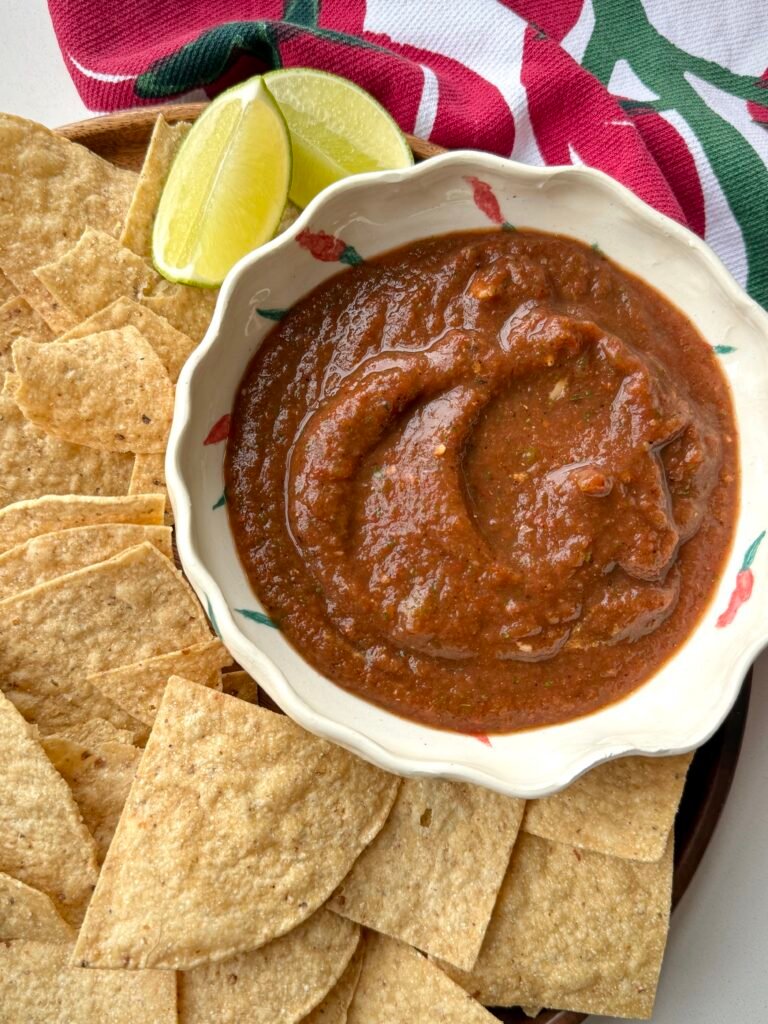
One of my favorite party tricks is that I make a mean salsa.
When I was in college, six of us would pile into my friend’s five-seater and drive 45 minutes up to Lake Elsinore to her parents’ house for the weekend. Picture starving, dirt-poor college kids living off Stouffer’s lasagna and Marie Callender’s chicken pot pie, then getting to walk into a home with the smell of homemade tamales wafting from the kitchen and fresh aguachile sitting on the counter. We would feast all day, then bring back tupperware full of tamales, sopa de albondigas, and her mom’s famous salsa.
It was in that kitchen that my friend’s mom taught me how to refry beans, how to toast tortillas over a gas stove, and, most importantly, her tricks for making great salsa. I don’t think I’ll ever reach the heights of how good her salsa was, but her tips and tricks have given my salsa a bit of a reputation of its own. It’s my favorite little party trick because people are always far more impressed by it than they probably should be, considering how little effort it actually takes.
So today, I’m passing those tips and tricks along to you. Because a really good salsa doesn’t need to be complicated: a little char, a few good fresh ingredients, and knowing how to balance the heat is pretty much all you need.
Why You’ll Love This Recipe
- A delicious, smoky charred flavor: Broiling the tomatoes, peppers, onion, and garlic gives this salsa that restaurant-style roasted flavor without having to fire up the grill.
- Customizable heat: Use the pepper guide to make it mild, medium, or spicy depending on your tolerance. I make my salsa different every time, depending on if I have guests, my mood, or how spicy I want to go on a regular Tuesday afternoon.
- Simple ingredients: Just a handful of fresh ingredients come together to make a salsa that’s so much better than anything from you’d get in a jar.
- Perfect for more than chips: Obviously amazing with tortilla chips, but it’s also great spooned over tacos, eggs, burrito bowls, grilled meats, and more.
Ingredients
You only need a handful of simple ingredients to make this salsa, and most of the flavor comes from giving the vegetables a good char under the broiler.
- Roma tomatoes work especially well in this because they’re less watery
- Peppers
- My favorite combo is jalapeño + serrano + a chipotle pepper in adobo, but you can play around with a million different variations
- You can also add dried chilies to switch up the flavor and spice levels. To use dried chilies, cut off the stems and remove the seeds. Toast in a dry skillet for 15-20 seconds, then soak in hot water for 20-25 minutes until soft before blending.
- Ancho or pasilla are great for smokey flavor, and are quite mild
- Chile de arbol are also common, but can be quite spicy
- Cilantro, Onions, Garlic, and Lime Juice all add flavor
- Chicken bouillon: A secret tip I learned from my roommate in college’s mom to add a bit of umami saltiness to salsa
Spice Level
The heat in this salsa comes from the jalapeño, serrano, and optional chipotle pepper. Since peppers can vary quite a bit in heat, use the guide below as a starting point and adjust to your taste.
- Mild: Remove all seeds from both the jalapeño and serrano or if you are quite sensitive to spice, use just a jalapeño, no seeds.
- Medium: Remove the jalapeño seeds, but leave the serrano seeds intact.
- Spicy: Remove half the jalapeño seeds, leave the serrano seeds intact, and add the chipotle pepper in adobo.
I recommend removing at least some of the jalapeño seeds, as they can add bitterness. You can always start with fewer seeds and add more if needed.
Tips & Tricks
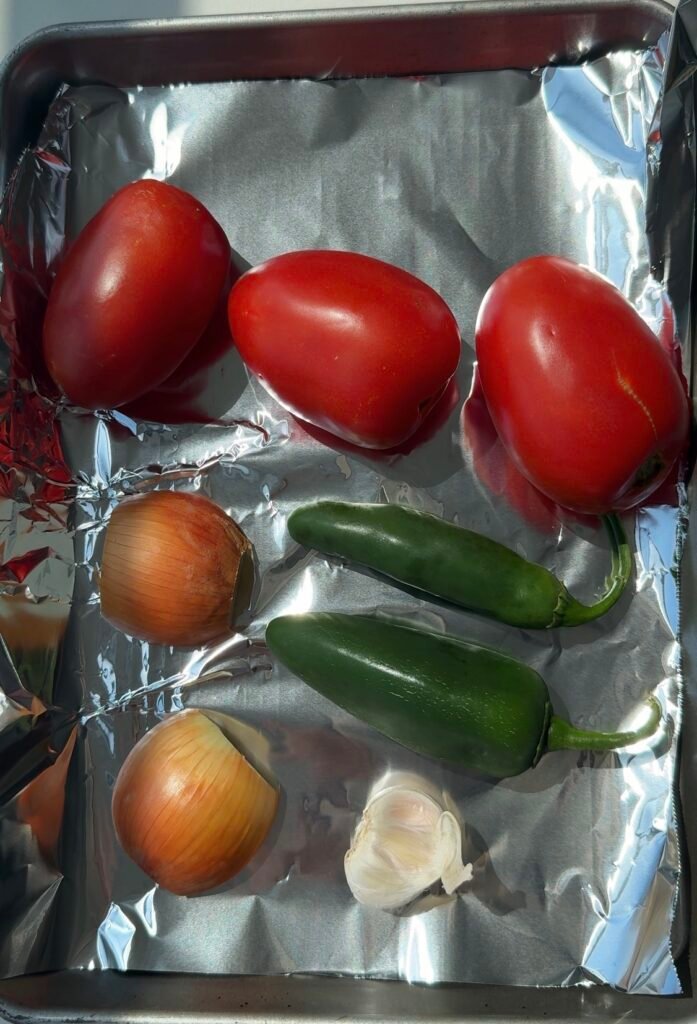
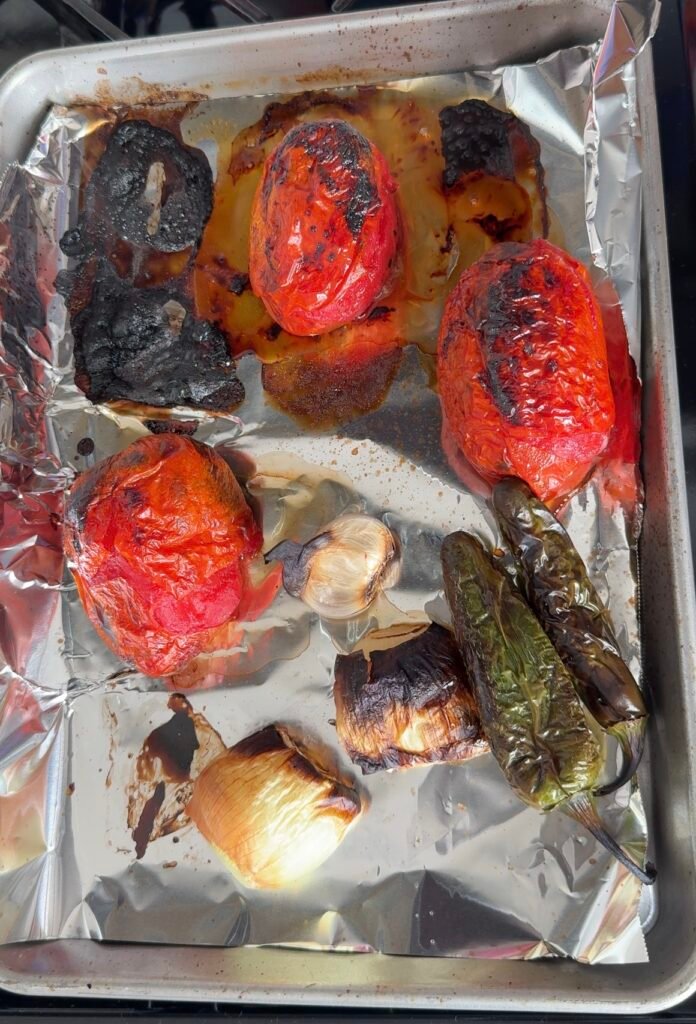
- Don’t be afraid of the char. You want the vegetables deeply blistered and blackened in spots, as the char is what gives this salsa its smoky flavor.
- Watch the vegetables closely. They won’t all cook at the same rate. The garlic and onion will be ready first, followed by the peppers, while the tomatoes can need up to even 18 minutes to get fully charred under the broiler. Rely more on your eyes than your timer!
- Adjust the heat to your peppers. Jalapeños and serranos can vary quite a bit in spice level, so use the mild/medium/spicy guide as a starting point and adjust to taste.
- Don’t skip the lime. The acidity balances the roasted tomatoes and keeps the salsa from tasting too heavy.
- Taste after blending. Depending on how sweet your tomatoes are, you may want a little more salt or lime juice to balance everything out.
Serving Suggestions
Grab a bag of tortilla chips and call it a day, or use this salsa to level up just about anything.
- Breakfast tacos or to make huevos rancheros
- Chicken or steak tacos
- Burrito bowls
- Quesadillas
- Grilled chicken or fish
Roasted Tomato Salsa
- Total Time: 25
- Yield: 2 cups
Description
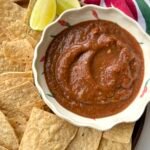
This roasted tomato salsa is an incredibly easy crowd pleaser for dipping tortilla chips, serving over tacos, or simply with eggs for breakfast!
Ingredients
For the Roasted Tomato Salsa:
- 3 roma tomatoes
- 1 jalapeño pepper
- 1 serrano pepper
- 1 chipotle pepper in adobo (optional)
- 2 cloves garlic, skin on
- ½ yellow or white onion, skin on, cut in half
- ¼ cup fresh cilantro
- Juice from 1 lime
- ¼ tsp chicken bouillon powder (optional)
- Salt to taste
- Tortilla chips for serving
Instructions
For the Roasted Tomato Salsa:
- Place an oven rack 6” from the broiler and preheat the broiler to high.
- Line a baking sheet with foil and add the tomatoes, jalapeño, serrano, quartered onion, and garlic cloves. Broil for 6–8 minutes, until the vegetables are charred and blistered. Remove the onion and garlic once they are charred and softened, then flip the tomatoes and peppers and continue broiling. Remove the peppers once they are charred all over, while the tomatoes may need up to 16–18 minutes total to become deeply charred. Keep a close eye on the vegetables, as they will finish at different times.
- Let the vegetables cool slightly. Remove the skin from the onion and garlic and add them to a blender along with the tomatoes. Remove the stems from the jalapeño and serrano, then prepare the peppers based on your preferred spice level:
- Mild: Remove all seeds from both peppers.
- Medium: Remove the jalapeño seeds; leave the serrano seeds intact.
- Spicy: Remove half the jalapeño seeds, leave the serrano seeds intact, and add the chipotle pepper.
- **I recommend removing at least some of the jalapeño seeds, as they can add bitterness. Since peppers vary in heat, you can always start with fewer seeds and add more to taste. You can always add spice, but it’s much harder to take it out!
- Add the peppers, cilantro, lime juice, chicken bouillon (if using), and salt to the blender. Blend until smooth, then taste and adjust the salt, lime juice, or spice level as desired.
- Place in an airtight container in the fridge to chill for at least 30 minutes before serving to help the flavors meld and allow the salsa to fully cool. Serve with tortilla chips or as desired.
Notes
**Since peppers vary in heat, you can always start with fewer seeds and add more to taste. You can always add spice, but it’s much harder to take it out!
- Prep Time: 10
- Cook Time: 15-20
- Category: Appetizer
- Cuisine: Mexican
Storage
Store leftover salsa in an airtight container in the refrigerator for up to 4–5 days. The flavor actually gets even better after a few hours in the fridge as everything has a chance to meld together. Give it a stir before serving.
FAQs
Can I make this salsa without a broiler?
Yes! You can char them on a grill or in a dry cast iron pan. The key is getting plenty of blistering and char on the vegetables.
Can I use canned tomatoes?
Fresh tomatoes are best for this recipe because they’re the star of the salsa, but fire-roasted canned tomatoes can work in a pinch. Just drain them well before blending.
How do I make roasted tomato salsa less spicy?
Remove the seeds and membrane from the jalapeño and omit the serrano and chipotle. You can also start with less jalapeño and add more after blending if needed.
Can I make this salsa spicier?
Absolutely! Leave more of the pepper seeds intact, add the chipotle pepper, or blend in an additional jalapeño or serrano. Add heat gradually (you can always add more, but it’s much harder to take it out).